

Greater Bengaluru Authority: Reshaping the Future of India’s Tech Capital
The Greater Bengaluru Authority (GBA) officially replaces the BBMP, marking a new chapter in Bengaluru’s governance. With five new municipal corporations, a 117 km business corridor, and a ₹123 crore waste-to-energy partnership, the GBA promises to redefine urban development and infrastructure in India’s fastest-growing city. But will the transformation deliver as planned?
A New Era for Bengaluru Governance
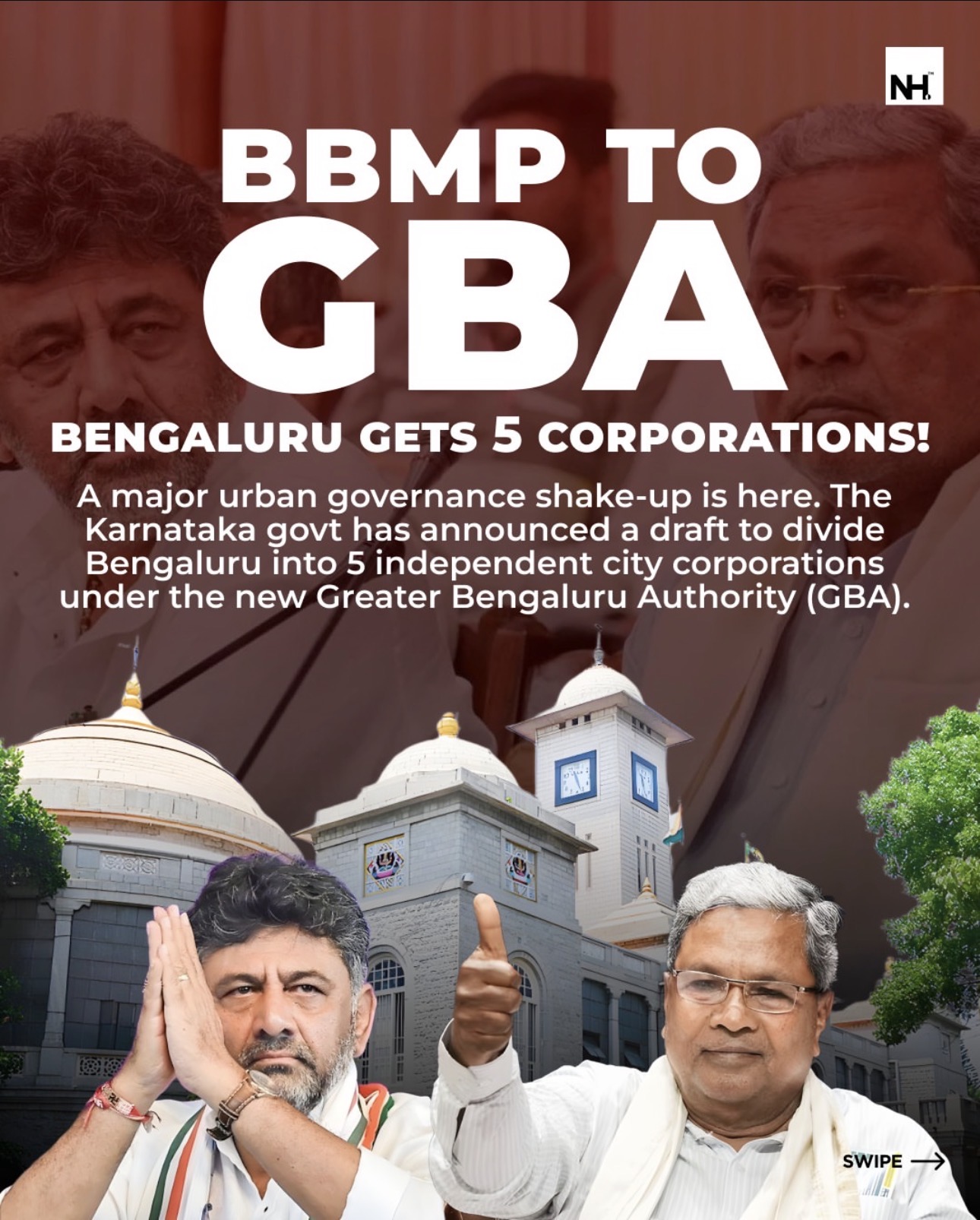
Bengaluru’s civic landscape is witnessing a historic overhaul. With the Greater Bengaluru Governance Act, 2024, the state government has dissolved the Bruhat Bengaluru Mahanagara Palike (BBMP) and formed the Greater Bengaluru Authority (GBA) — a unified metropolitan body overseeing five independent corporations.
This new structure aims to decentralise service delivery while centralising long-term planning, ensuring faster decision-making, improved accountability, and better infrastructure management for the city’s 1.4 crore residents.
Major Announcements and Projects
1. 100 Critical Roads Redevelopment
GBA’s first major infrastructure push focuses on rebuilding 100 of Bengaluru’s busiest and most damaged roads. The initiative is part of a larger 117 km Business Corridor Plan to improve mobility and ease congestion in high-traffic zones.
2. GAIL Partnership for Green Energy
The Authority has signed an MoU with GAIL (India) Ltd. to convert 500 tonnes of wet waste daily into bio-gas, reducing landfill pressure and producing sustainable fuel. The ₹123 crore project is one of the largest waste-to-energy initiatives in South India.
3. Expansion of Jurisdiction
Deputy Chief Minister D. K. Shivakumar confirmed that neighbouring panchayats and industrial hubs like Anekal will soon be brought under the GBA, increasing the city’s governed footprint and creating new real-estate opportunities.
4. Upcoming Elections and Representation
The GBA will eventually oversee five city corporations with nearly 450 elected corporators. Elections will shape the next phase of governance and determine how responsive the new system is to citizens’ needs.
Opportunities and Challenges Ahead
-
Opportunities:
-
Greater coordination in infrastructure and urban planning.
-
New contracts in construction, roadworks, waste management, and green energy.
-
Expansion into peripheral regions driving real-estate growth
-
-
Challenges:
-
Staffing shortages and transitional delays from the old BBMP system.
-
Political resistance from opposition parties over procedural concerns.
-
Execution bottlenecks due to monsoon disruptions and funding constraints.
-
Impact on Construction and Real Estate
For construction and property developers, the GBA signals both opportunity and complexity. With five separate corporations under one umbrella, builders must identify which body governs their project area and stay aligned with new zoning, TDR (Transferable Development Rights), and khata regulations.
For those developing real-estate verification platforms, this transition underscores the growing need for reliable, updated property and jurisdictional data — especially as new boundaries and corporations are defined.
Bengaluru’s Urban Makeover Begins
The formation of the Greater Bengaluru Authority is more than an administrative reform — it’s an attempt to modernise one of India’s most dynamic cities. Success will depend on how efficiently GBA executes its ambitious plans and bridges the gap between vision and delivery.
For Bengaluru’s citizens and businesses alike, the coming months will reveal whether this bold experiment brings tangible improvements to urban life — or simply redraws the map without fixing the fundamentals.